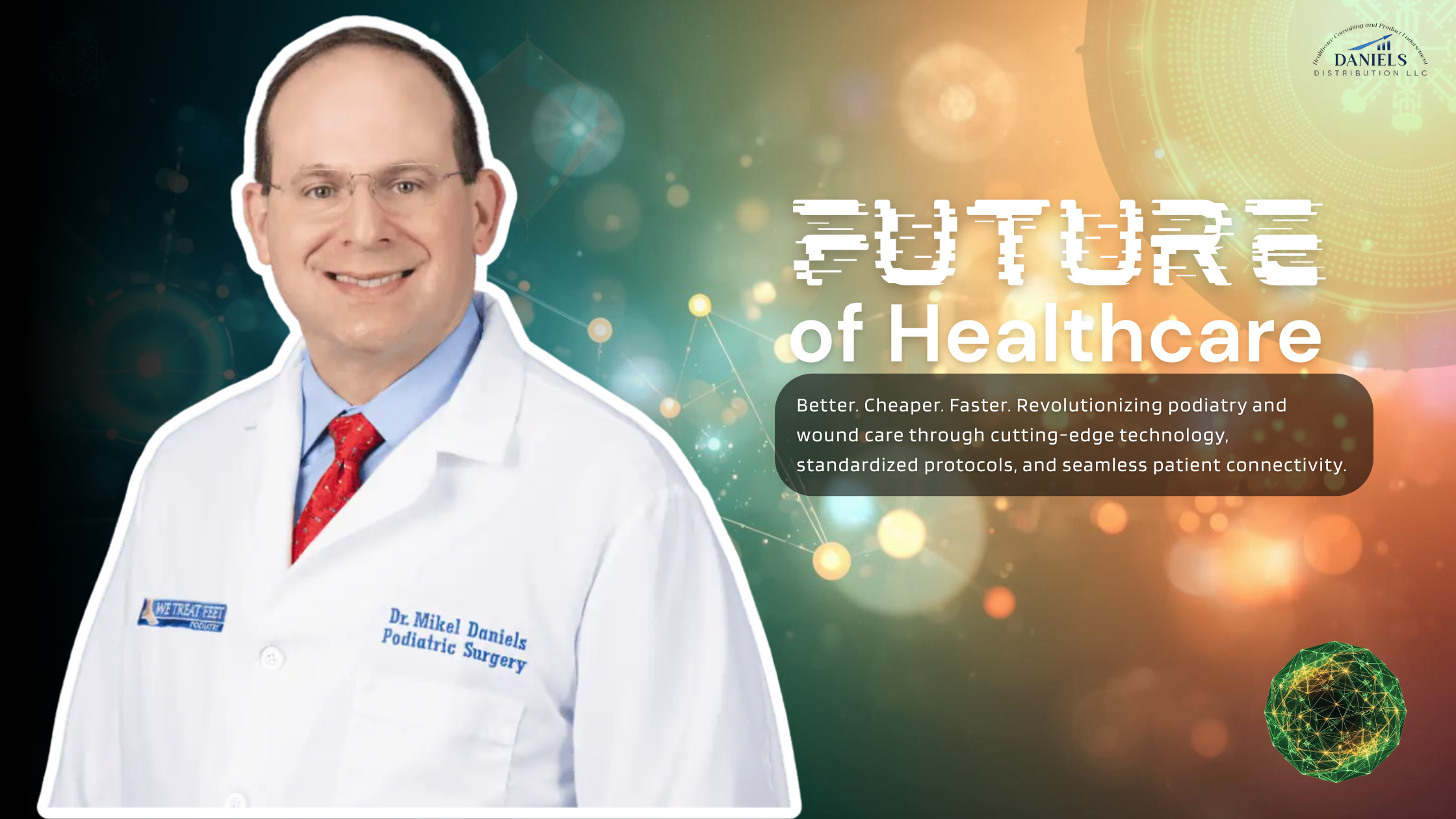
In 2026, medical progress means outperforming yesterday’s care on outcomes, cost, and access. This means things need to be better, cheaper, faster. Make today’s treatment better than yesterday’s. Costs are paramount, and speed of the essence. Is this really the future of medicine? I spend a good amount of time thinking about this. What will medical care look like when I am no longer a spook on a cog, but a patient in a bed?
Medicine only progresses when it delivers care that is better for the patient, more affordable for the system, and faster to access in the real world. That is the framework I use every day as a clinician at WeTreatFeet Podiatry and as a consultant and educator through The Podiatry Voice. After more than two decades of doing this work, I have learned that if an idea does not improve at least two of those three areas, better, cheaper, or faster, it usually looks good in a presentation but fails when it meets real patients and real clinics dealing with real insurance providers.
When I talk about making medicine better, I am not referring to marketing language. I am talking about actual outcomes. That means fewer amputations, fewer deep infections, and fewer people losing their independence because of wounds that never heal.
At WeTreatFeet Podiatry, across our locations in Maryland, Washington DC, and Pennsylvania, we have built our model around advanced lower extremity care. We focus on foot and ankle surgery, diabetic limb preservation, and complex wound care. We do this with a practical focus on what truly changes a patient’s trajectory. That often means using advanced technologies such as bioengineered tissue grafts and negative pressure wound therapy. It also means pairing those technologies with the basics that are not glamorous but are absolutely essential. Those basics include offloading, blood sugar control, vascular evaluation, proper shoegear, and consistent follow up.
Many times, the real turning point for a patient is not the “high tech” solution. It is getting them into the right shoe with the right offloading device and giving them a clear plan that fits their actual life.
Better care also requires honesty about surgery. My clinical background includes advanced reconstructive procedures and minimally invasive surgery. I have worked extensively with implant and fixation systems and have helped teach and refine several of these techniques over the years. I have lectured on bunion correction with specific plate systems and on subtalar implants. I have consulted with biomedical companies to improve the tools we use in the operating room.
In my own practice, however, surgery is a tool, not a default answer. The decision to operate must be grounded in biomechanics, long term durability, and realistic recovery. The question is simple, will this procedure give this person a more stable and more functional foot? That same mindset, careful and practical, is what I try to share with colleagues and through my content on LinkedIn and X.com
The second pillar, making care cheaper, is where my clinical experience and business background intersect. In private practice, you quickly see how expensive avoidable complications really are. A major diabetic foot infection that ends in amputation can cost tens of thousands of dollars when you add hospitalization, operating room time, intravenous antibiotics, rehabilitation, and lost productivity.
The human cost, which includes loss of independence, depression, and caregiver burnout, does not even show up on a financial statement. If I can keep that same patient in my office (instead of the hospital) with aggressive wound care, intelligent offloading, appropriate diabetic shoes, and close monitoring, I have reduced cost for the payer, the patient, and the family. That is what I mean by cheaper. It is care that improves outcomes without cutting corners on quality.
We have adopted tools and workflows that support this approach. Structured follow up, remote monitoring, and properly used telehealth visits are not temporary ideas left over from the pandemic. They are now permanent parts to keep high risk patients on our radar. This is done without forcing them to miss a full day of work for a brief wound check. Newer research into remote and technology assisted monitoring of wounds and diabetic feet is pointing in the same direction. These tools use images, temperature data, and pattern recognition to identify trouble earlier.
The result is intervention before the situation becomes critical. From a consulting standpoint, this is where I push practices and health technology teams to focus. If your solution can truly reduce hospitalizations, major amputations, or unnecessary in person visits, you have more than an interesting tool. You have something directly tied to outcomes and cost. That is where payers, health systems, and group practices start paying attention.
The third pillar is speed. Faster care is often misunderstood. It does not mean rushed visits or assembly line medicine. It means reducing friction so patients receive the right care at the right time without needless delays. At WeTreatFeet, we have worked deliberately to build a multi location, multi provider model that allows patients to be seen quickly for most foot and ankle problems.
From Owings Mills to Rosedale to Towson at University of Maryland St. Joseph Medical Center, the idea is straightforward. Get the person in, make an accurate diagnosis, and start a clear plan. Having imaging, wound supplies, and diabetic shoe and orthotic services available on site lets us compress the care timeline even more. Instead of stretching diagnosis, treatment, and prevention over several separate visits and weeks, we can often address all three in a much shorter time frame.
Telehealth plays a role in speed as well, but only in appropriate situations. A fresh postoperative complication, such as a wound that has opened, needs an in person exam. A stable chronic wound that is slowly improving, a diabetic shoe follow up, or a minor flare up with a known history can often be safely managed with good quality photographs or even a focused video visit.
I think of the construction worker who cannot easily afford to lose a day’s pay to come in for every single follow up. By alternating in person visits with telehealth check ins, and by having him send wound photos on a schedule, we can make his care more realistic and efficient without sacrificing safety. That is not just convenience. It is adherence and continuity.
When you combine better, cheaper, and faster, you start to see the real opportunities for innovation. This is the conversation I have with clinicians, practice owners, and entrepreneurs through The Podiatry Voice, and my consulting work. The overlap of those three goals is where the real value lives. A remote monitoring platform that lets a podiatrist review photos quickly, automatically flag any concerning changes, and integrates directly into the existing clinical workflow will improve healing, prevent expensive hospital admissions, and reduce unnecessary office visits.
By integrating a remote monitoring platform directly into the clinical workflow, podiatrists can quickly review photos and receive automatic flags for concerning changes. This approach will lead to improved healing outcomes, a reduction in unnecessary office visits, and the prevention of costly hospital admissions. A networked and protocol driven practice, with standardized pathways for diabetic foot care, wound management, and surgical decision making, can spread best practices across multiple locations. That means patients in different offices benefit from the same well designed playbook, instead of relying on chance or individual habit.
From the practice management side, I spend a lot of time considering these issues. Where does practice spending effort that does not improve any of the three pillars? What practice activities are being done that do not contribute to improving the three main pillars? If a process does not make care better, cheaper, or faster, it is a candidate for streamlining, automation, or removal? That may include repeated paperwork, poorly designed scheduling templates, inefficient referral patterns, or technology that adds clicks and complexity without adding meaningful value. I focus on that intersection of clinical excellence and business reality. If a practice fails financially, patients eventually lose access to care, no matter how good the medicine might be.
As a medical writer, speaker, and consultant, I see one more layer that often gets overlooked. Communication must be a part of this equation. If patients do not understand the plan, they will not follow it (they might understand and not follow it anyway!). If staff doesn’tt understand why a new protocol or device matters, adoption will be weak. If leadership does not clearly see how an innovation improves outcomes, reduces total cost, or speeds up access, it will not receive long term support. That is one of the reasons I created The Podiatry Voice. It gives our profession a place to discuss clinical reality, business strategy, and innovation in the same conversation and in plain language.
Right now, there are enormous opportunities in medicine, especially in podiatry and limb preservation. We are facing aging populations, rising diabetes rates, payer pressure to control cost, and a growing list of new tools, from implants to remote devices, that are ready to be used intelligently.The challenges we face include an aging populace, increasing rates of diabetes, and pressure from payers to curb expenses. Simultaneously, a growing range of new tools, from implants to remote devices, are available and ready for intelligent application. On WeTreatFeetPodiatry.com, you can see our commitment to advanced care, appropriate technology, and patient centered service across many locations.
On PodiatryVoice.com, you can see the thinking behind those choices and how we help other practices navigate the same questions. In both settings, I use the same test. Does this make care better, cheaper, and faster for real patients in real clinics with real conditions? If the answer is yes to at least two of those, and ideally all three, then we are not just changing our workflows or buying another device. We are moving medicine in the direction that actually matters.